The FYP deliverables encompassed the full conceptualisation, development, and execution of a Chingay float. The project began with initial design ideations supported by moodboards and illustrations to establish the visual direction and narrative of the float. This was followed by futuristic city concept explorations, where design ideas were further refined and integrated with material considerations.
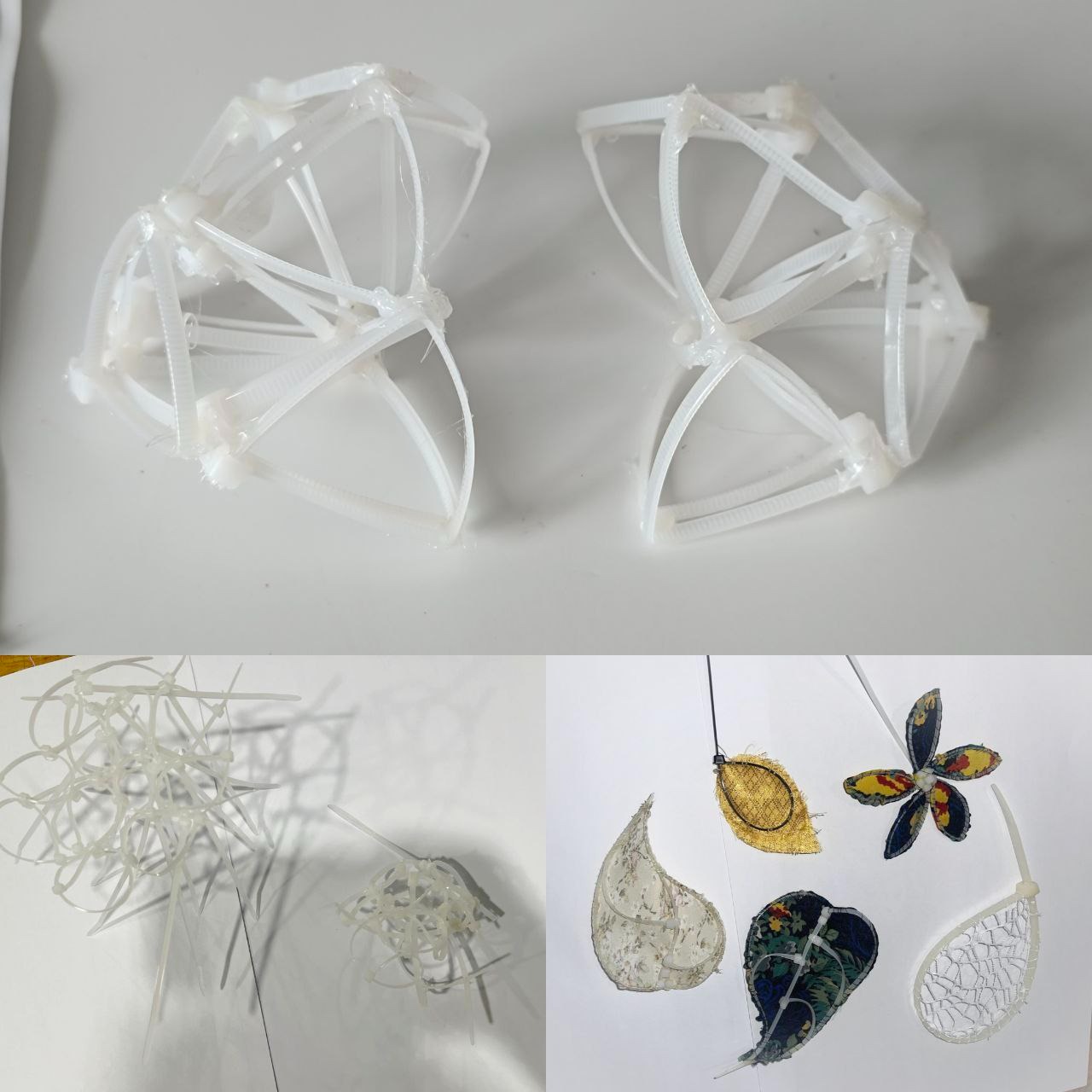
A significant portion of the deliverables involved material exploration and experimentation, particularly using cable ties, batik fabric, and corrugated cardboard. These materials were tested and refined to ensure they met requirements such as durability, weather resistance, and weight limitations while remaining visually impactful. The team also developed multiple iterations of a mascot head and incorporated local landmarks provided by the People’s Association to strengthen community representation.
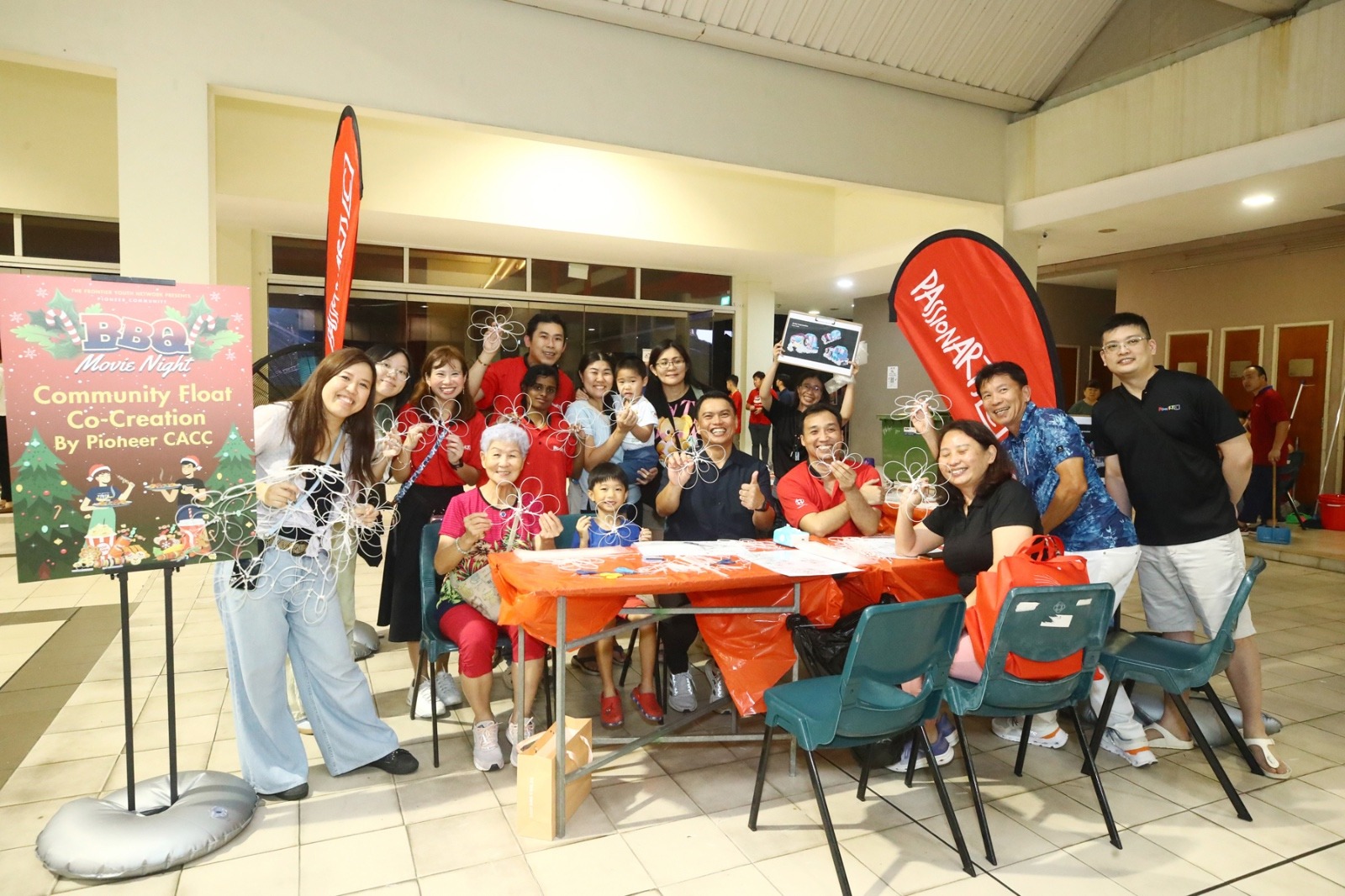
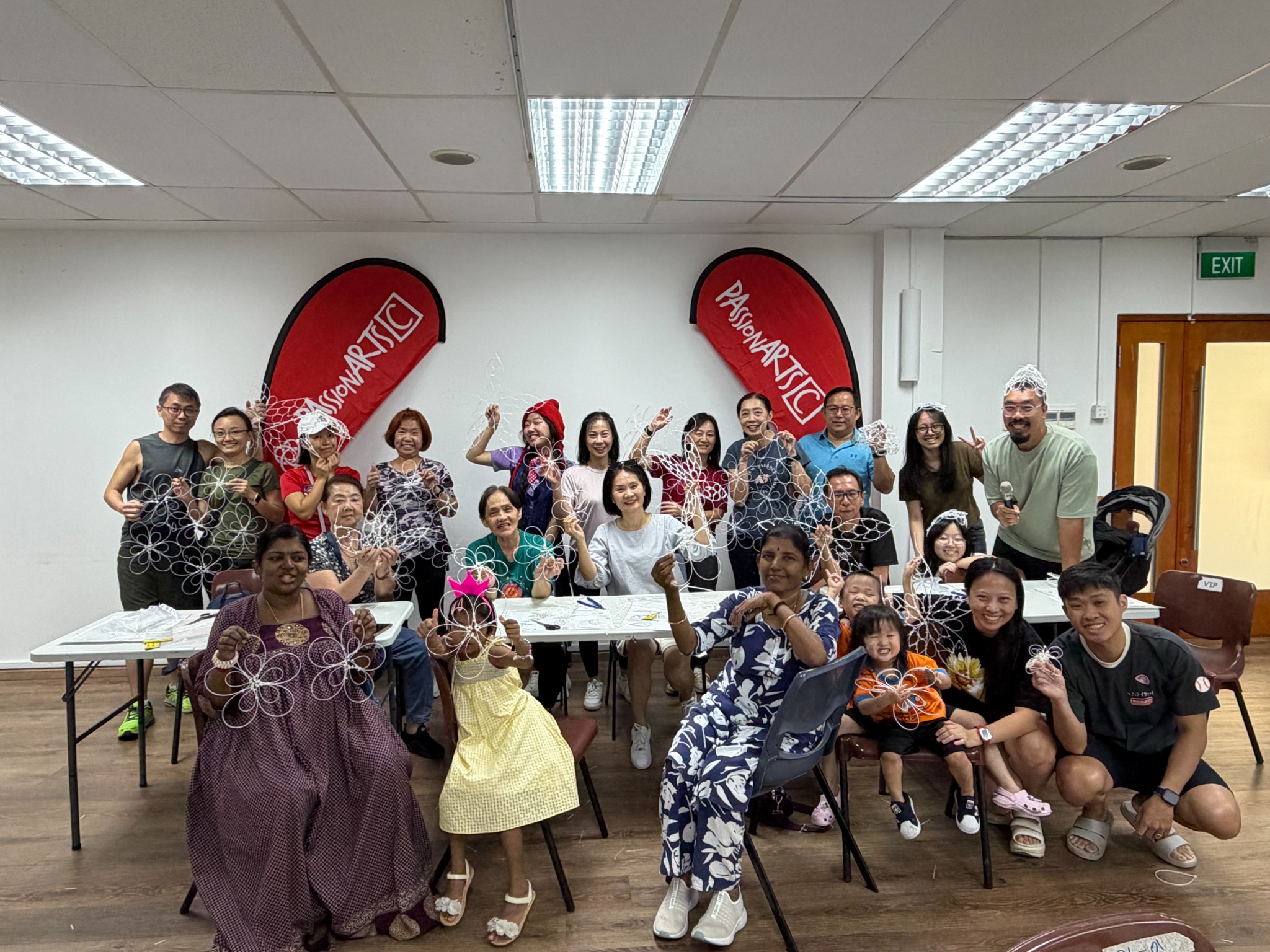
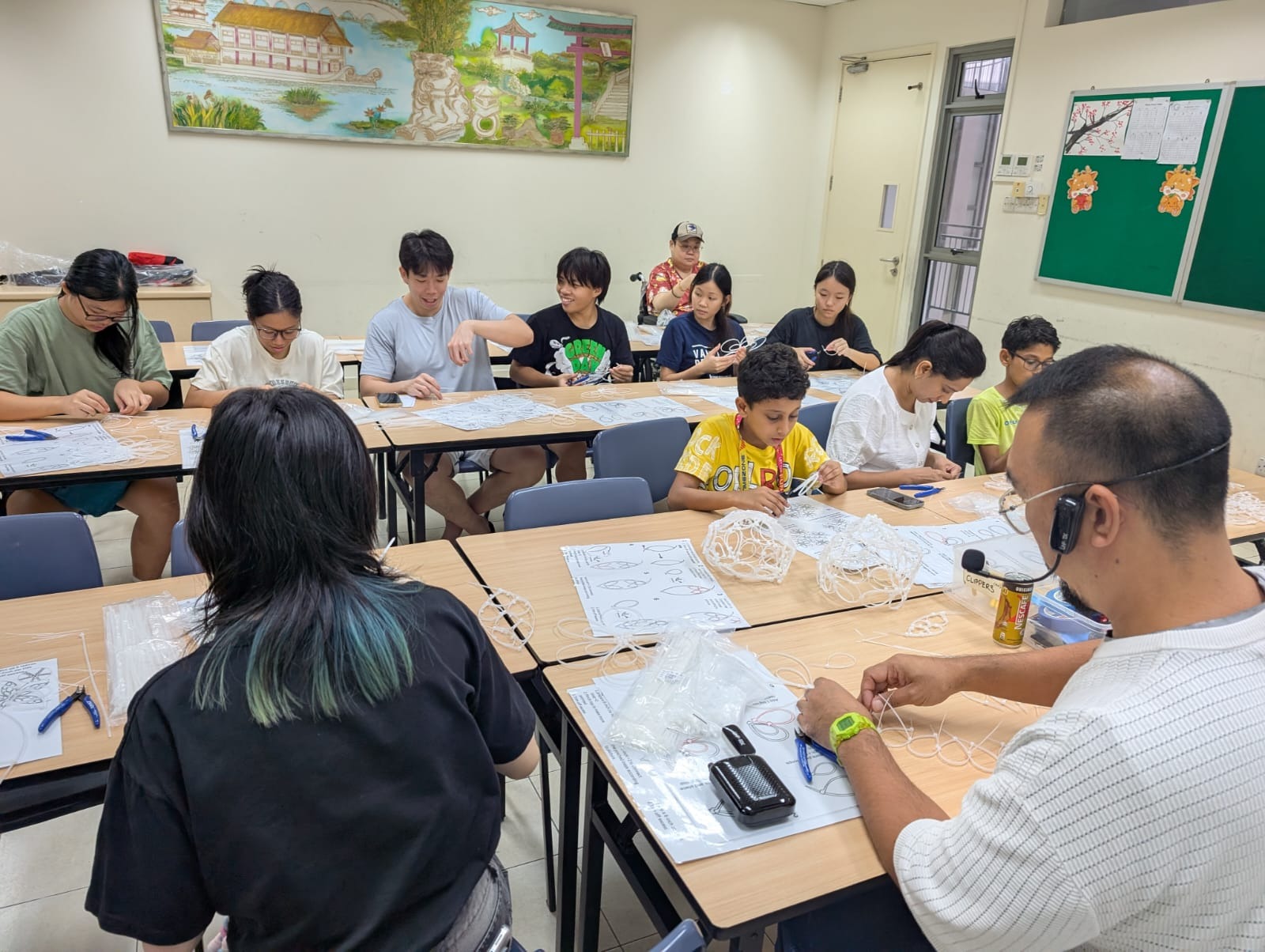
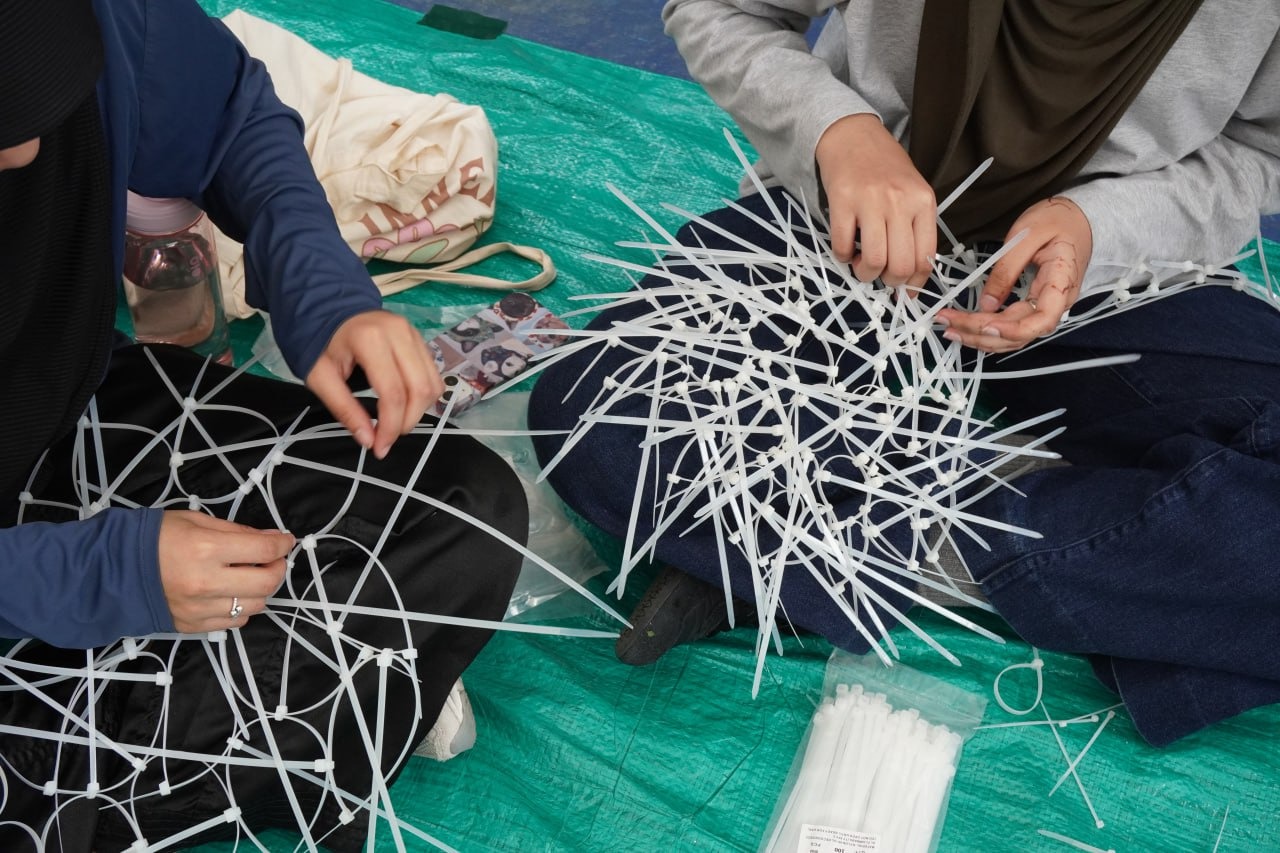
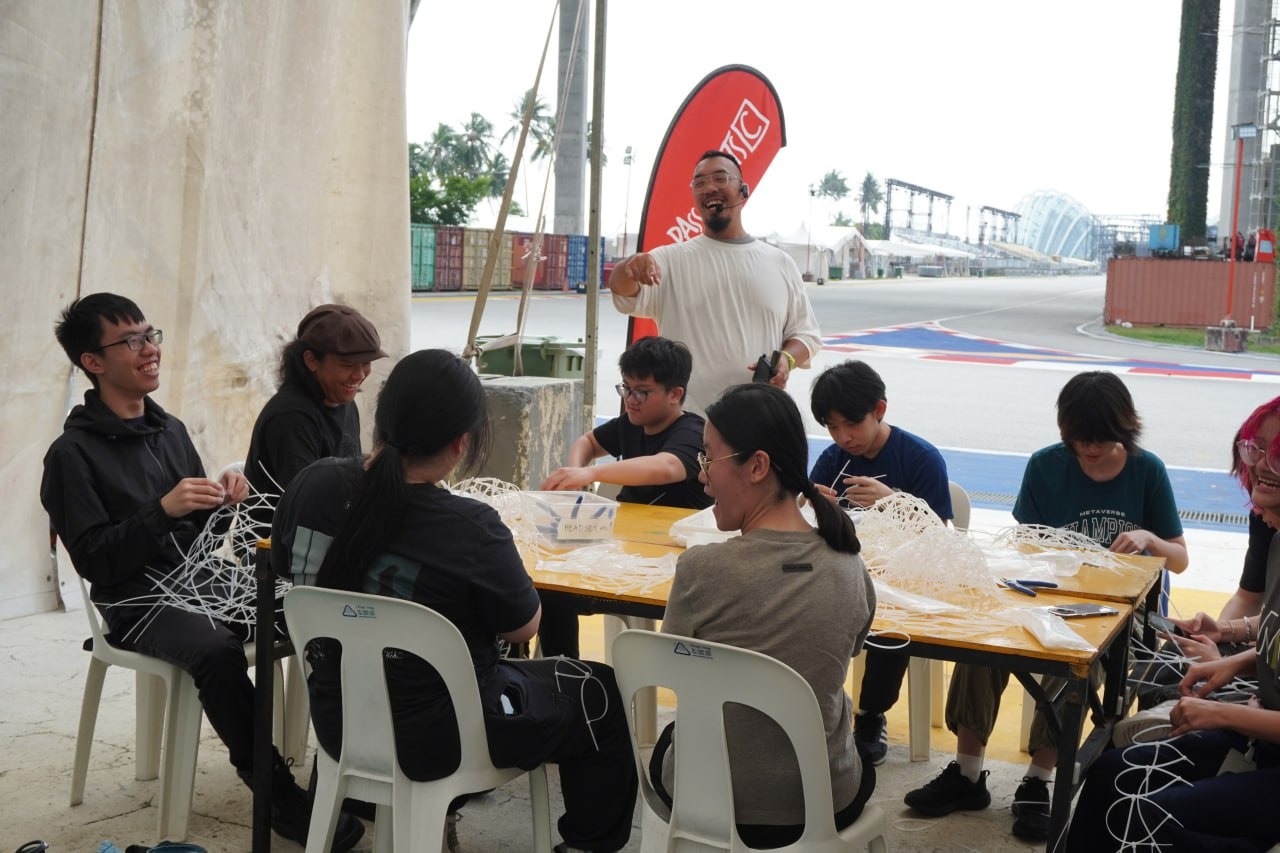
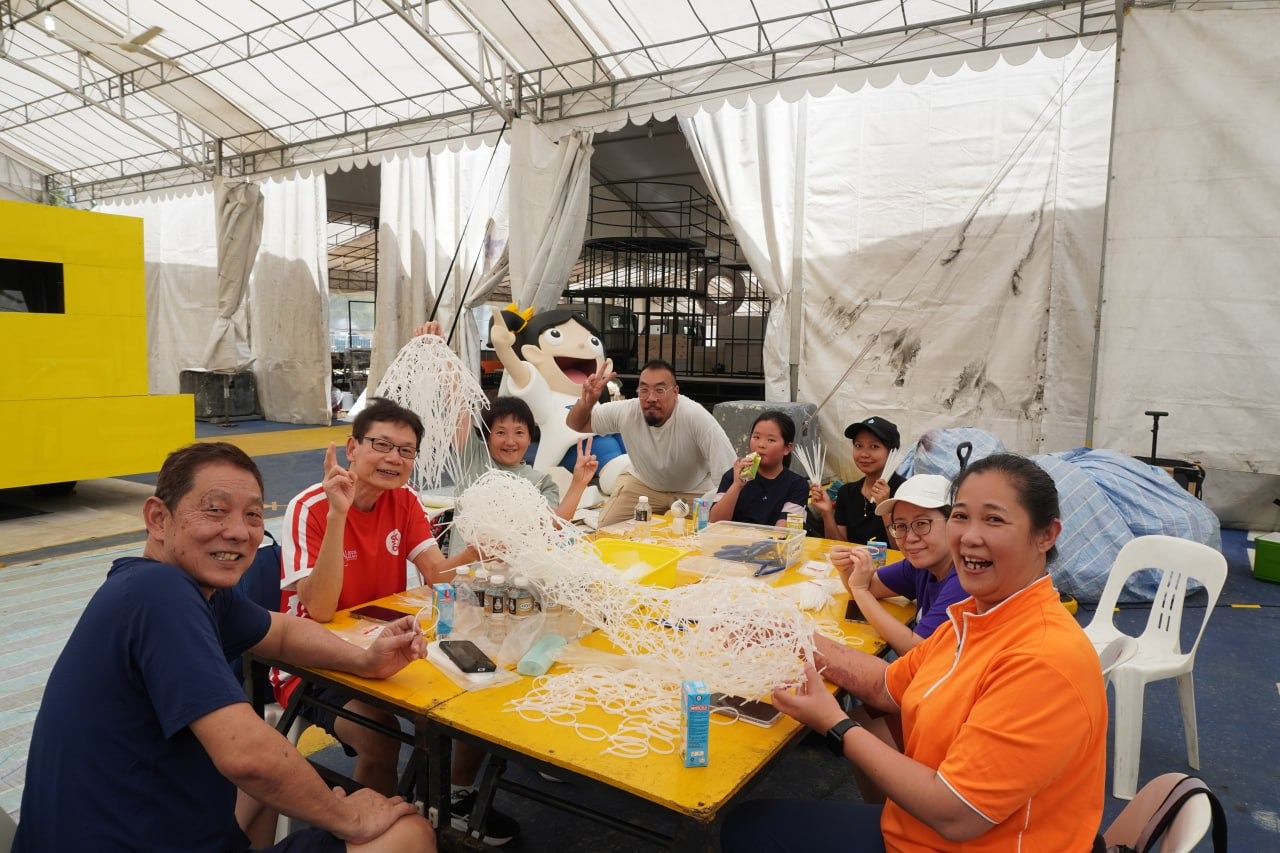
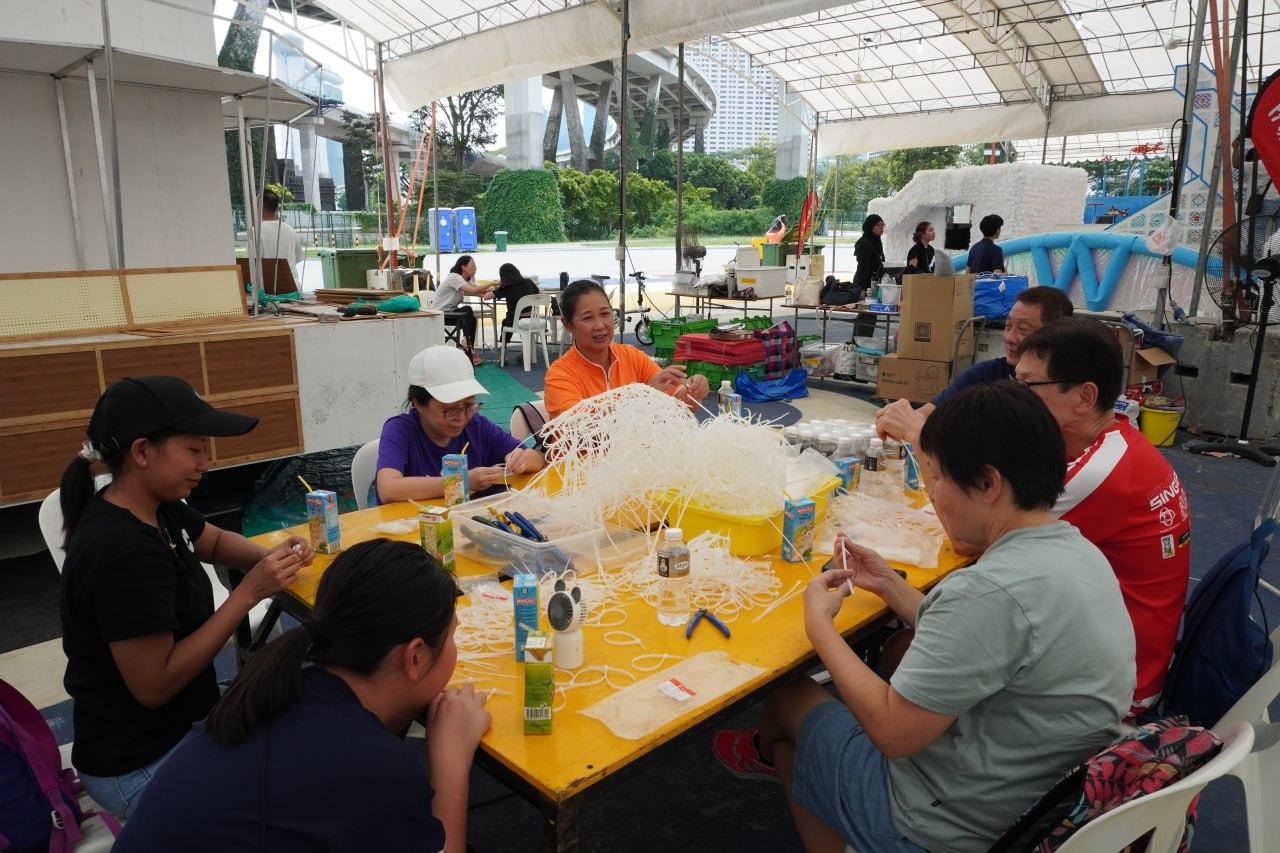
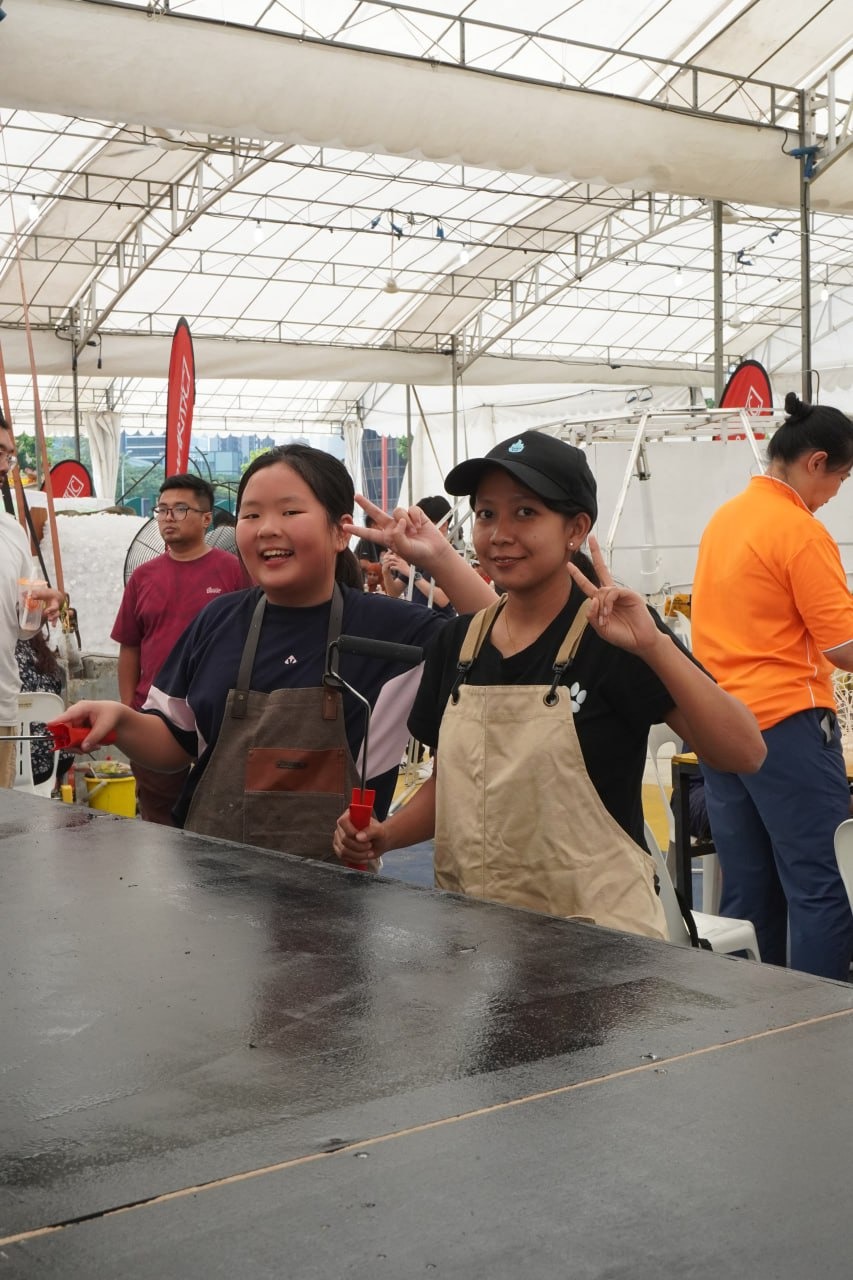
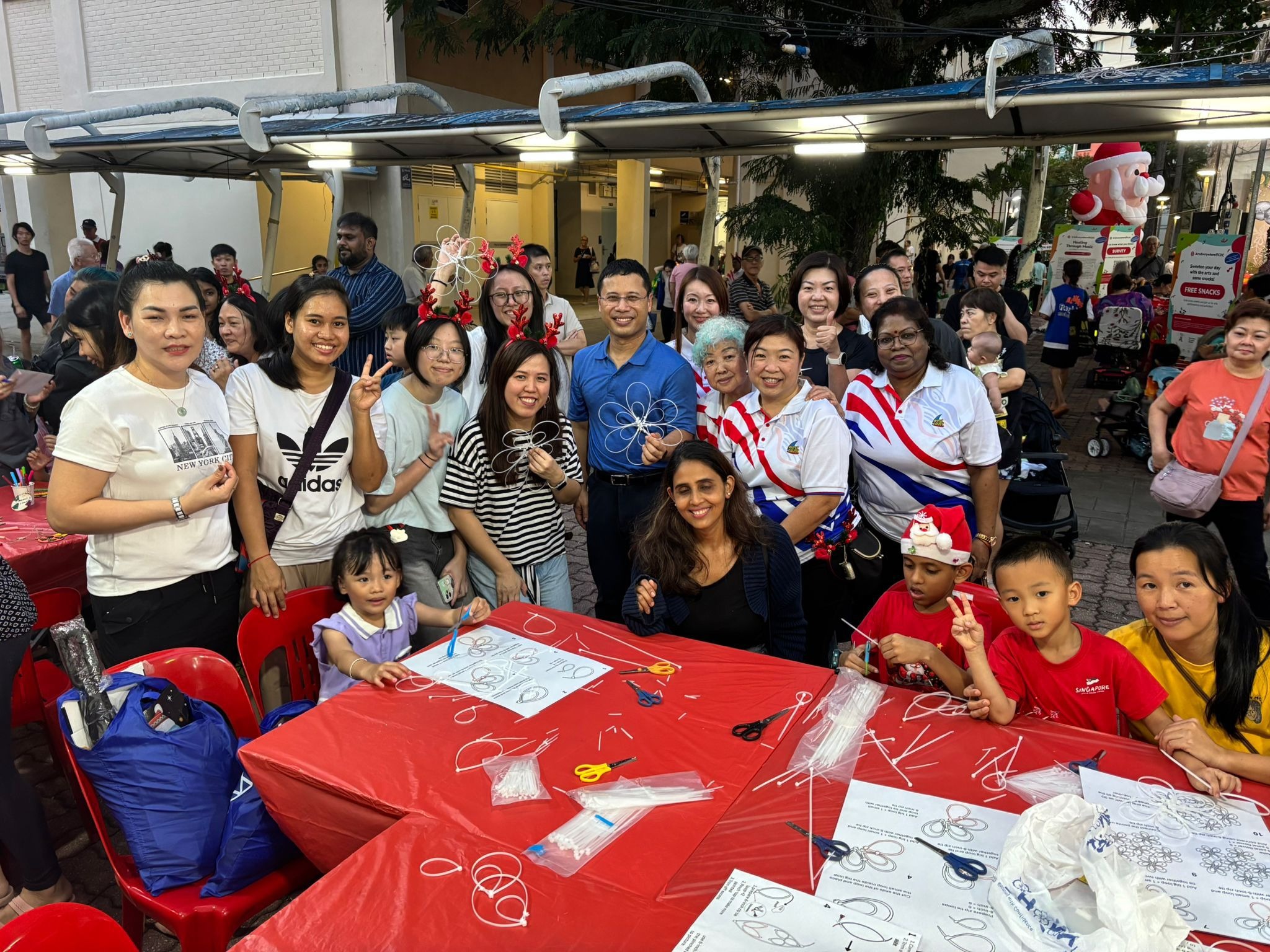
In addition to design and fabrication, the project deliverables included planning and executing workshops at Republic Polytechnic and across the Southwest District. This involved preparing materials, guiding participants, and ensuring their contributions could be integrated into the final float. The team also handled volunteer recruitment through a Microsoft form and DIY portal, coordinated volunteer schedules and hours, refined community-made elements, and completed final float assembly and on-site management at the F1 Pit Building.

One key contribution I made to the project was material exploration and prototyping, particularly for textile and mixed-media elements. During the early stages, I tested various fabrics on cable-tie structures to evaluate their durability and visual effect in an outdoor setting. For instance, when working with batik fabric that frayed easily, I explored solutions such as rolling and sewing the edges or reinforcing them with glue. These experiments helped ensure that the materials chosen were lightweight, weather-resistant, and suitable for long-term outdoor display. By creating small-scale prototypes, I enabled the team to assess feasibility early and reduce the risk of material failure during final assembly.
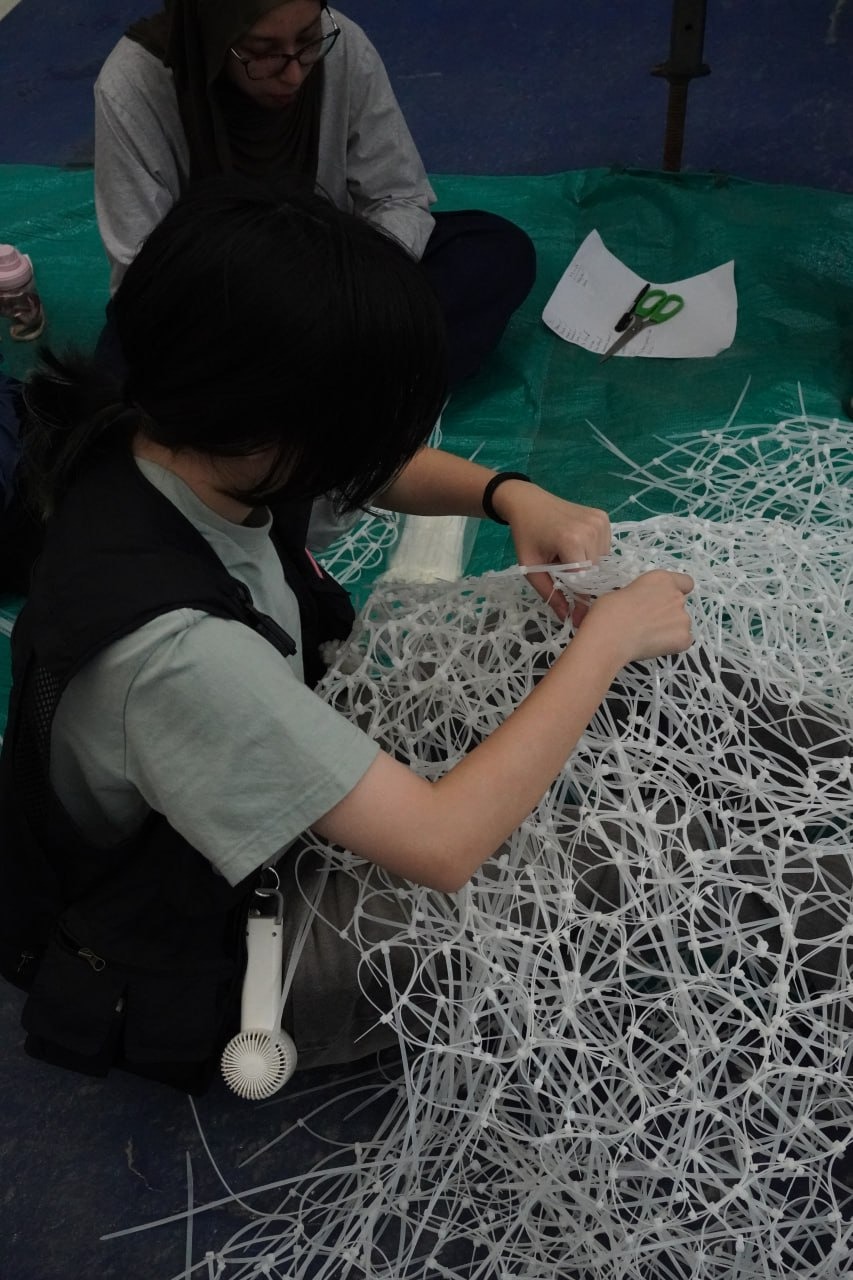
Secondly, I contributed by translating abstract design ideas into practical, buildable structures. I researched and tested methods for constructing volumetric dome forms using cable ties, studying how shape, tension, and density affected the final result. Through hands-on experimentation, I refined the construction process by starting with a flatter top, filling larger loops to reduce gaps, and transitioning from large to medium cable ties to minimise protruding ends. These refinements improved both the structural stability and visual finish of the domes, making them more polished and suitable for public display.
Lastly, I supported the project through community engagement and adaptability during workshops. I helped simplify construction steps so participants of different ages and skill levels could follow easily. I demonstrated techniques using sample pieces, actively answered community questions, and adjusted methods when issues arose. When feedback or constraints required changes, I responded quickly by refining prototypes and suggesting alternatives. This helped maintain consistency across community-made elements, improved workshop efficiency, and ensured that the final outputs aligned with the overall design vision.
One important lesson I learned through this project was time management under pressure. Due to the project’s public-facing nature and multiple external dependencies, the timeline was often tight and unpredictable. Delays caused by client processes and scheduling constraints meant that deadlines became increasingly compressed. At the same time, I had to juggle float construction, report writing, portfolio preparation, and other module assignments. To cope with this, I developed a more disciplined approach to planning by creating weekly schedules, using countdown and task-management apps to track deadlines, and maximising travel time to complete smaller tasks. This experience strengthened my ability to prioritise tasks, adapt to changes, and work efficiently under high-pressure conditions.
Secondly, I learned the critical importance of clear and consistent communication. With multiple stakeholders involved—including teammates, artists, and community participants—miscommunication could easily affect progress. I learned to provide timely updates, clarify expectations, and raise concerns early rather than waiting for problems to escalate. Effective communication helped ensure that creative intentions, technical limitations, and practical requirements were clearly understood by all parties. This improved collaboration within the team and contributed to smoother project execution.
Lastly, I learned the value of flexibility and making concessions for the greater good of the project. I realised that insisting on a single “best” approach is not always productive in collaborative settings. For example, during the creation of digital batik panels, team members had different working methods and levels of precision. Instead of debating which method was superior, I learned to accept different processes as long as the final outcome met the overall design vision. This experience taught me to respect diverse perspectives, reduce unnecessary conflict, and focus on achieving effective results as a team rather than prioritising individual preferences.